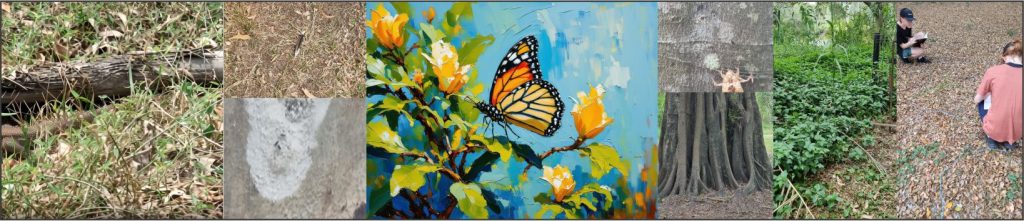
Biology Field Study in a Living Laboratory at LOGANHOLME
Field studies vary depending on weather, seasonal changes, and which habitats are most active at the time. This ensures students experience a wide range of biological investigations while learning how scientists adapt their work in real environments.
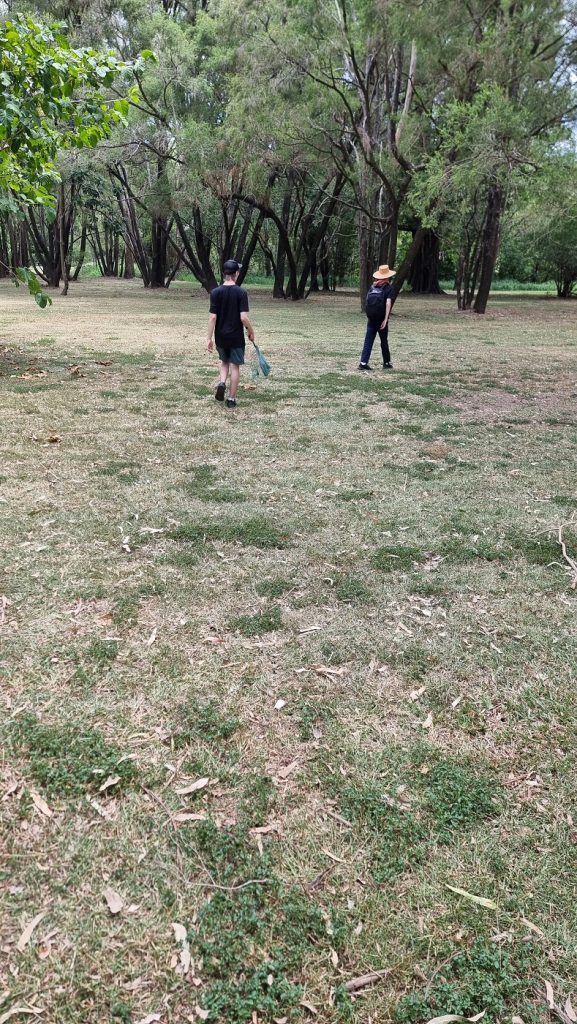
We begin each session with a guided biology field study in the diverse habitats of the Park. Our living laboratory we can take part in real scientific observation and contribute to the kinds of records used in citizen science projects. Exploring:
- The park’s living ecosystems, from plants and animals to soil and water.
- Observe and record interactions between different species and their habitats.
- Investigate how seasonal changes affect the park’s flora and fauna.
- Learn methods scientists use to study biodiversity and monitor environmental health.
- Engage with hands-on field activities to develop real-world biology skills.
Including: click to see more
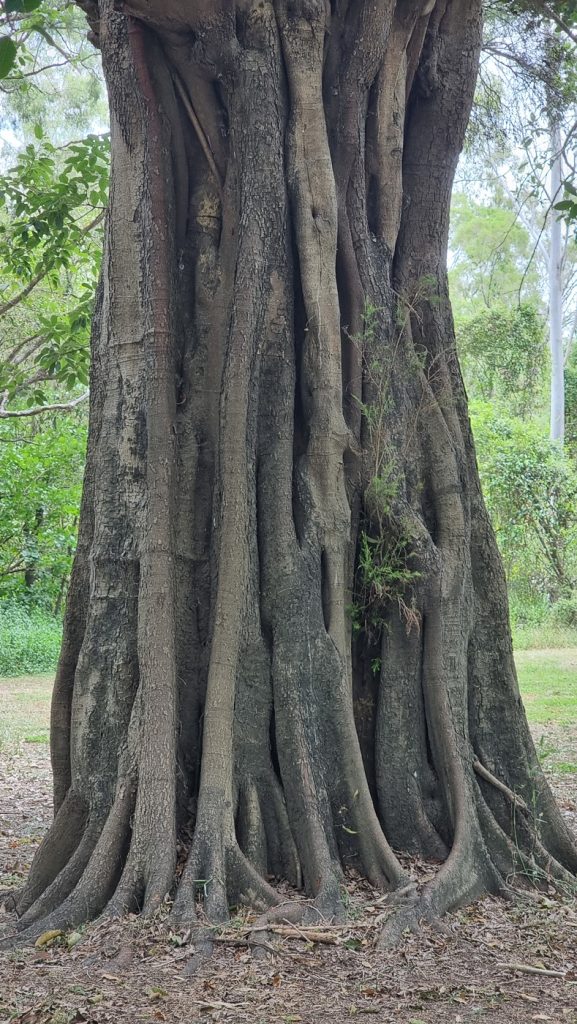
- Plant identification and classification (trees, shrubs, grasses)
- Leaf morphology and leaf margin study
- Insect survey, identification, tracking
- Bird watching and species recording
- Soil sampling and analysis
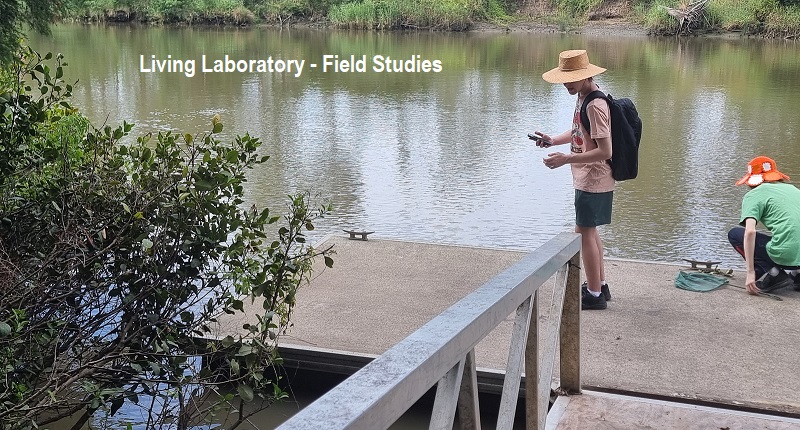
- Water quality testing in creeks and ponds
- Microhabitat exploration (logs, leaf litter, under rocks)
- Fungi and mushroom identification
- Ecological relationships and food web observations
- Seasonal changes and phenology studies
- Quadrat and transect surveys
- Human impact and conservation observations
COSTS ($30 per month – up to 8 sessions- to help cover costs – YES family and circumstances considered)
Please note due to health and allergy constraints, food/lunch not provided, you will need to bring your own.
There is water at the park
Environmental science in action…
Park-Specific Habitats and Skills
Students will explore park-specific habitat zones—bushland, open grass areas, pond, and riverbank ecosystems within Alexander Clark Park—and develop key scientific skills:
- Species recording – documenting organisms similar to those used in citizen science databases
- Seasonal biology – noticing how plants, fungi, and animals change throughout the year
- Field observation skills – learning how scientists carefully observe, compare, and record living organisms
- Field notes and sketch recording – capturing key details to support later laboratory and creative work
Integrated Biological Fields
The biology fields are integrated, meaning botany, entomology, zoology, mycology, and ecology are explored together. This approach helps students see the connections between plants, fungi, insects, and animals in real ecosystems, rather than studying each in isolation. Exploring multiple interconnected fields enriches understanding and encourages critical thinking about how living systems function.
Rolling Program and Portfolio Development
The studies follow a rolling program, so each session builds on previous observations. Missing a session is not detrimental—students can join any study and continue to develop their portfolio over the year.
Over time, students gradually build a comprehensive field portfolio of notes, sketches, and species records, reflecting their ongoing exploration of the park and its unique habitats. The rolling nature of the program also allows students to focus on areas of personal interest, gaining insight into what working in a particular scientific field involves, while still appreciating the bigger ecological picture.
Extended Works to Art and Writing
Observations and quick filed sketches made during field studies can be expanded to guided art and creative writing sessions, allowing students to interpret and communicate their findings visually and through written expression. This integration of science, art, and writing supports deeper learning and creates a tangible record of their experiences.
BONUS – CREATIVE WRITING skills come alive with this integration.
Suited to the capabilities of the cohort.
COSTS ($25 per month – up to 8 sessions of art and writing – to help cover costs – YES family and circumstances considered)
Please note due to health and allergy constraints, food/lunch is not provided, you will need to bring your own.
There is water at the park
Science and Art Integration
Observations from the biology field studies are brought to life through art activities, helping students develop careful observation skills, artistic technique, and a deeper connection to the natural world. Students transform what they see in the park—plants, fungi, insects, animals, and habitats—into artistic representations, while learning to label and document their observations scientifically.
We will engage in art activities such as:
- Pencil observation techniques – focused field sketching of plants, fungi, insects, and animals
- Pastel – capturing colour, texture, and light in plants, fungi, and habitats
- Acrylic painting – representing habitats, patterns, and ecological relationships with vibrancy and depth
- Textured mixed media – exploring layered materials and tactile techniques to convey natural forms and environments
- Scientific labelling – accurately annotating plant parts, fungi structures, and other observed organisms with names, habitat notes, and key details
- Portfolio compilation – organizing sketches, labelled drawings, and artworks into a keepsake reflecting the year’s observations
- Observation-driven creativity – turning scientific observations into artistic interpretations
This approach strengthens visual literacy, attention to detail, and artistic confidence, while producing a portfolio that is both scientifically accurate and creatively expressive, linking art directly to the biology field studies.
Science and Creative Writing
The biology field studies at Alexander Clark Park also feed directly into inspired and sometimes hilarious creative writing activities, helping students transform their observations into imaginative stories and narratives. Using real-world inspiration from plants, fungi, insects, and animals, students explore how science can spark humour, fantasy, and inventive storytelling.
- Observation-inspired storytelling – turning field notes and sketches into imaginative tales
- Humour in nature – exploring funny behaviours and quirky traits in real species
- Fantasy worlds rooted in science – creating fantastical settings inspired by real ecosystems and flora and fauna engineering
- Species profiles with a twist – combining scientific detail with creative storytelling
- Ecological narratives – showing relationships between species and habitats in story form
- Portfolio compilation – collecting creative work to showcase growth over the year
- Linking science and imagination – using real observations as inspiration for inventive writing